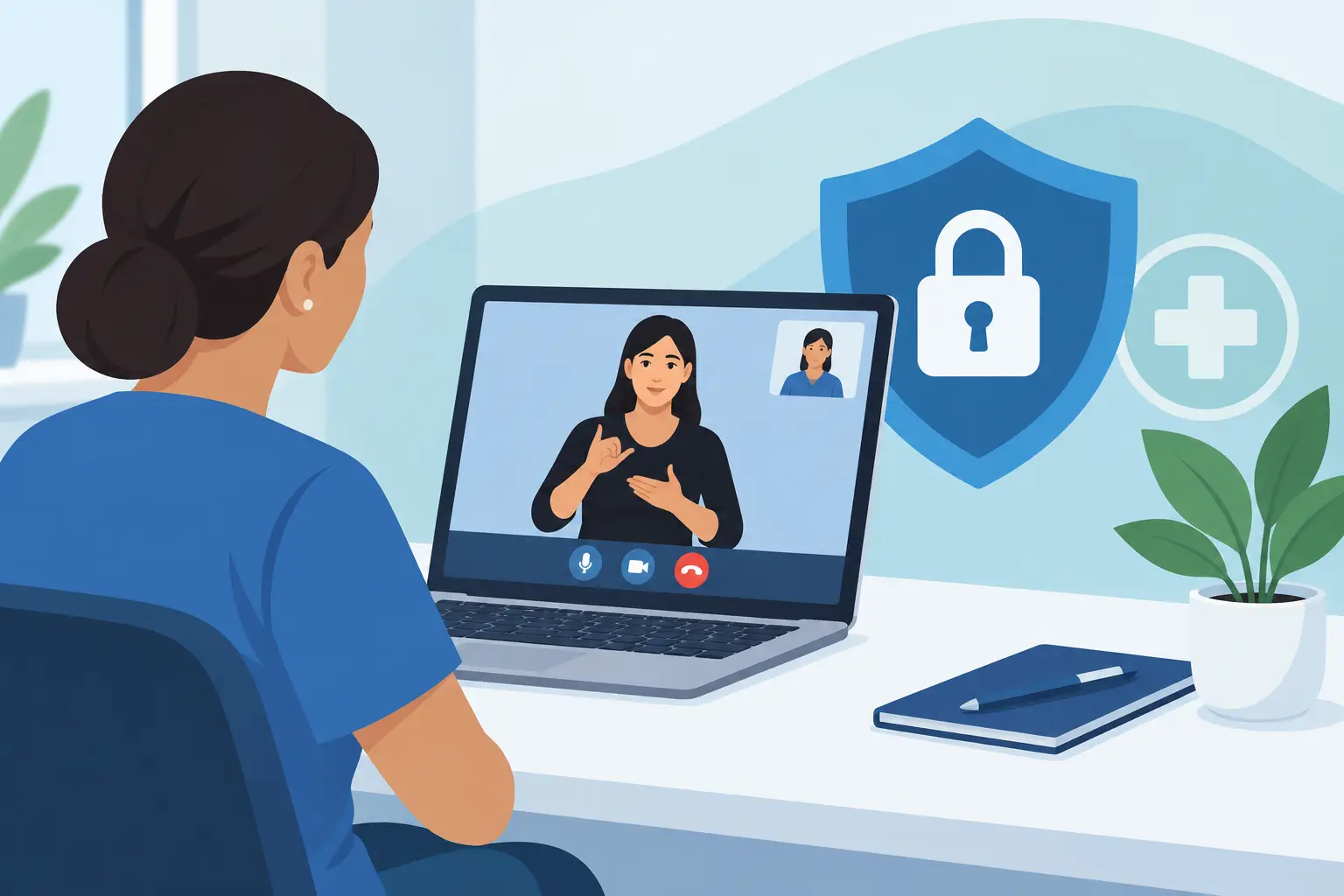
A patient arrives for a time-sensitive follow-up appointment, but the on-site interpreter is delayed by traffic. A clinician still needs to explain medication changes, confirm consent, and answer questions clearly. For Deaf and hard-of-hearing patients, HIPAA compliant video interpreting services can make the difference between a delayed conversation and timely, accessible care.
Video interpreting is not simply a video call with an interpreter added. In healthcare settings, it must support accurate communication while protecting protected health information (PHI), fitting into clinical workflows, and giving staff a reliable way to coordinate access. The technology matters, but so do interpreter qualifications, scheduling processes, and the ability to respond when plans change.
What HIPAA Compliant Video Interpreting Services Require
HIPAA compliance is a shared responsibility. A healthcare provider cannot assume that a video platform is compliant simply because it includes security features. The provider, the technology vendor, and any service partners must each handle their responsibilities appropriately.
For video interpreting, the core question is whether PHI can be protected throughout the encounter. This includes information shared verbally, visible on screen, entered into a chat, or associated with appointment details. The service should use safeguards appropriate to the communication method, including secure access controls and encryption for data in transit. If the vendor creates, receives, maintains, or transmits PHI on behalf of a covered entity, a business associate agreement may be required.
A compliant workflow should also avoid unnecessary exposure. Staff should not send patient details through unsecured channels just to arrange an interpreter. Interpreters should join only the scheduled session, with the information they need to perform the assignment effectively. Recordings should not be made by default, and any recording policy should be deliberate, documented, and aligned with organizational requirements.
HIPAA is only one part of the access picture. Healthcare organizations also have obligations to provide effective communication under disability rights laws. A secure platform that does not provide a qualified interpreter, reliable video quality, or a practical way to connect at the point of care may still fail the patient experience.
Why Interpreter Quality Is a Clinical Concern
A secure video connection cannot correct an inaccurate interpretation. In a medical appointment, small distinctions can affect diagnosis, informed consent, discharge instructions, and a patient's ability to participate in decisions about their care.
Professional sign language interpreters bring more than language fluency. They apply interpreting skills, ethical standards, and the ability to manage the pace and turn-taking of a clinical conversation. Healthcare experience is particularly valuable when appointments involve specialized terminology, emotionally difficult discussions, or multiple participants such as family members, specialists, and care coordinators.
Organizations should avoid treating a bilingual employee, family member, or companion as a substitute for a qualified interpreter. These arrangements can create privacy concerns, put pressure on the patient, and introduce errors or omissions. There are limited circumstances in which a patient may request a specific communication preference, but the organization should have a clear process for addressing those requests rather than making assumptions.
Video delivery also requires interpreters who are comfortable working in a remote environment. They need appropriate lighting, a professional background, stable connectivity, and the technical awareness to confirm that everyone can see one another before the clinical conversation begins.
Build a Workflow That Works Under Pressure
The best video interpreting program is designed around real appointment conditions, not ideal ones. Clinics deal with late arrivals, urgent consults, appointments that run long, and schedule changes across multiple locations. A useful service model supports planned coverage while preserving a path for faster requests when circumstances require it.
For scheduled care, the process should begin when the appointment is created or confirmed. Staff need a simple way to request an interpreter, share the appointment time and location or virtual meeting details, identify the language need, and note relevant logistics. Administrative teams should receive confirmation and have visibility into whether the assignment is filled.
Real-time tracking is especially valuable for high-volume systems. Instead of calling multiple people to determine whether an interpreter has been assigned or joined the session, coordinators can monitor fulfillment status in one place. That visibility helps teams identify problems early, communicate with patients, and adjust workflows before a missed connection becomes a missed appointment.
For unscheduled needs, establish a clear escalation path. Staff should know who to contact, what information to provide, and what alternative communication supports are available while an interpreter is being connected. This avoids the common failure point where everyone agrees access is necessary but no one knows how to activate the service quickly.
Prepare the Clinical Space
Even a well-coordinated interpreter session can be undermined by poor setup. Position the camera so the patient, clinician, and interpreter have a clear view. Avoid backlighting, crowded screens, and placing the device so far away that facial expressions and signing are difficult to see.
Before discussing health information, confirm that the video and audio are working and that the interpreter can see all relevant speakers. Speak directly to the patient, not to the interpreter. Use natural pacing, allow time for interpretation, and pause when staff members enter or leave the room so the patient does not miss part of the exchange.
Questions to Ask a Video Interpreting Partner
Selecting a service should involve more than checking whether the platform offers video calls. Healthcare leaders should evaluate the entire delivery model: interpreter access, confidentiality practices, scheduling support, operational visibility, and response procedures.
Ask how interpreters are qualified and matched to healthcare assignments. Clarify whether the service can support scheduled appointments, recurring clinics, and urgent requests. Request a clear explanation of how the platform protects session information and whether business associate agreement requirements can be supported.
It is also worth asking what the coordinator experience looks like. Can staff submit requests without lengthy back-and-forth emails? Can they see assignment status in real time? Is there a defined support process if an appointment changes, a connection fails, or an interpreter becomes unavailable?
The answers will vary based on the organization. A small specialty practice may prioritize a straightforward scheduling process and consistent interpreter relationships. A hospital system may need centralized reporting, support across departments, and coordination for hundreds of appointments. Schools and university health centers may need a mix of healthcare-aware video interpreting and in-person coverage for longer or more complex interactions.
Common Gaps to Avoid
One common mistake is assuming that any consumer video tool is suitable for confidential care. Another is waiting until a patient is in the room before beginning the interpreter request. Both approaches shift the burden of poor planning onto the patient and clinical staff.
Organizations also run into trouble when they separate accessibility from operations. If interpreter requests are managed outside standard appointment workflows, staff may forget to schedule them, information may be incomplete, and leaders may have no meaningful view of fulfillment. Accessible communication needs ownership, documentation, and dependable coordination just like any other patient-facing service.
Finally, do not measure success only by whether an interpreter was technically present. Review whether sessions began on time, whether interpreters were appropriate for the assignment, whether patients could participate fully, and where recurring delays occur. These details reveal whether the program is delivering access in practice.
Make Access Part of Care Delivery
HIPAA compliant video interpreting services work best when they are treated as part of the care delivery system, not as a last-minute accommodation. A qualified interpreter, secure technology, and organized scheduling each support a different part of the same goal: giving patients the information and voice they need during their care.
For healthcare organizations managing appointments across teams or locations, a managed partner such as myinterpreting.net can bring together professional sign language interpreters, video access, robust scheduling, and real-time tracking. The practical standard is simple: when a patient needs to communicate, the organization should be ready to make that communication clear, confidential, and dependable.